Siding Installation Price Per Square: 2026 Cost Guide
Knowing the true siding installation price per square keeps contractors from overcharging you on your exterior remodel. Last spring, I reviewed four bids for a 2,200-square-foot colonial in Ohio, and the quotes swung by nearly $9,000 just because two crews padded their waste allowances. Most homeowners pay between $680 and $1,500 per square installed in 2026, depending on your wall material and local labor rates.
What a Square of Siding Costs to Install in 2026
Getting an accurate siding installation price per square starts with learning how exterior crews measure your walls. Contractors never bid jobs by the individual plank or panel. They group your exterior surface area into uniform blocks so they can order bundles and schedule crew hours quickly.
Defining a siding square: 100 square feet explained
One roofing or siding square equals exactly 100 square feet of wall area (a 10-by-10-foot section). If your home has 1,800 square feet of exterior wall space, you need 18 squares of material before waste. Crews normally add 10% to 15% extra to cover angled gable cuts and window cutouts.
Average installed price per square by region
Local wages and shipping distances change your final bill more than almost any other factor. According to the Remodeling Cost vs. Value Report published by Zonda, exterior cladding projects in the Pacific and New England regions run 18% to 25% higher than identical jobs in the Midwest or South.
Northeast and West Coast pricing
Expect to pay $980 to $1,700 per square installed in states like California, Massachusetts, and Washington. Strict building codes, higher insurance premiums, and steep disposal fees drive up the baseline labor rate.
Midwest and Southern pricing
Homeowners in Texas, Ohio, and Georgia typically see quotes between $580 and $1,200 per square. Lower permit costs and wider year-round installation windows keep crew rates competitive in these markets.
Material Prices Per Square: Vinyl, Fiber Cement, Metal
Material selection accounts for roughly 45% to 60% of your total project cost. While standard polymer panels keep upfront spending low, heavier boards demand specialized cutting blades and larger installation teams. If you want to compare smaller unit measurements before meeting a sales rep, review our breakdown of siding installation price per square foot.
| Siding Material | Material Only (Per Square) | Installed Total (Per Square) | Expected Lifespan |
| Standard Vinyl | $115 – $230 | $580 – $880 | 20 – 30 years |
| Insulated Vinyl | $230 – $375 | $780 – $1,200 | 25 – 35 years |
| Engineered Wood | $260 – $440 | $880 – $1,350 | 30 – 40 years |
| Fiber Cement | $310 – $575 | $1,050 – $1,600 | 40 – 50 years |
| Steel or Aluminum | $360 – $680 | $1,150 – $1,800 | 40 – 60 years |
Budget-friendly options under $200 per square
Standard D4 or D5 vinyl panels remain the lowest-cost cladding on the supply house shelf. You can buy contractor-grade vinyl for $115 to $195 per square, though starter strips, J-channels, and corner posts add another $40 to $65 per square. Check our full vinyl siding installation price guide to see how panel thickness affects wind ratings.
Premium materials and what drives the upcharge
Upgrading to James Hardie fiber cement or heavy-gauge seamless steel pushes material costs past $360 per square. Factory-baked color finishes add another $125 to $185 per square, yet they save you from hiring painters five years later. You also pay more for silica-dust vacuum systems and carbide-tipped saw blades required on fiber cement sites.
Labor and Prep Costs Inside the Per-Square Price
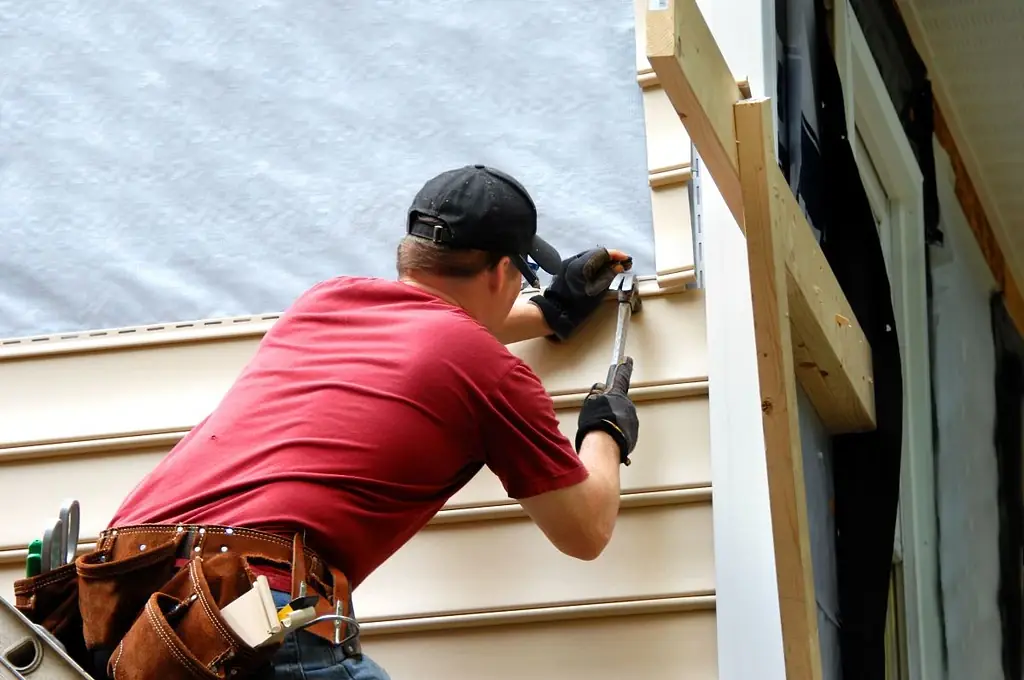
A clean wall surface rarely exists beneath twenty-year-old cladding. Once my crew pulls off warped boards, we frequently find rotted OSB sheathing around sill plates that must be replaced before new panels go up.
Tear-off, disposal, and house wrap fees
Stripping old siding, hauling it to a transfer station, and hanging fresh weather-resistive barrier costs $125 to $270 per square. Many contractors separate these line items so you can see exact dump fees on your invoice.
-
Old cladding removal: $65 to $125 per square depending on nail density.
-
Dumpster rental and haul-away: $35 to $70 per square for a 20-yard roll-off container.
-
House wrap and seam tape: $25 to $55 per square for woven polyolefin barrier.
-
Rotted sheathing replacement: $80 to $115 per 4×8 sheet of CDX plywood or OSB.
Why two-story homes cost more per square
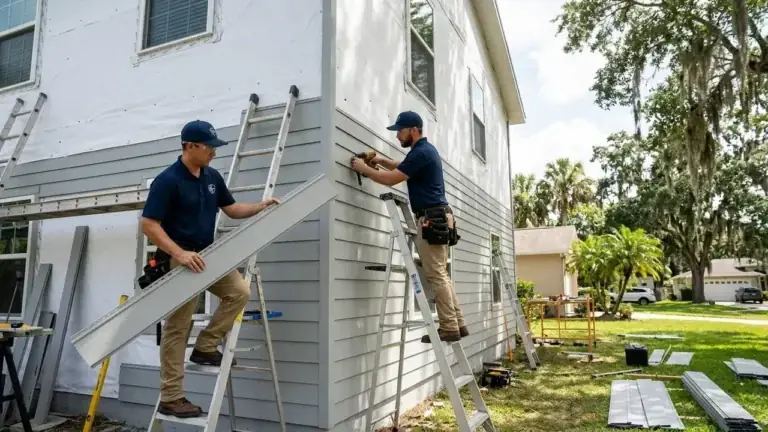
Working twenty feet off the ground slows a three-person crew down by roughly 30%. Installers spend extra hours setting up pump jacks, walk boards, and fall-arrest harnesses before snapping a single chalk line.
Scaffolding and safety setup
Renting or transporting aluminum pump-jack poles adds $80 to $145 per square to upper-story wall sections. Crews also need clear driveway or yard access to anchor their poles safely into solid ground.
Second-story material handling
Carrying 12-foot fiber cement planks up extension ladders takes two workers instead of one. That extra handling time bumps labor rates from $360 per square on a ranch home to $520 or more on a tall colonial.
How to Get an Accurate Per-Square Estimate
Never sign a contract based on a rough curbside guess from a salesperson’s truck window. Accurate pricing requires physical wall measurements, moisture checks around trim boards, and an itemized scope of work. For a closer look at how contractors structure vinyl bids specifically, see our vinyl siding install price per square breakdown.
Measuring your exterior walls correctly
Walk around your house with a 25-foot tape measure and sketch each wall on graph paper. Multiply the width by the height of every rectangular section, then add half the width times the height for triangular gable peaks. Subtract large garage doors, though most contractors leave standard windows in the math to cover trim coil wrapping.
Questions to ask contractors before signing
Ask every estimator to break out material squares, waste percentage, and trim accessories on separate lines. Verify that their installation method follows the Vinyl Siding Institute (VSI installation manual) guidelines, especially leaving a 1/4-inch gap at trim pockets so panels can expand in summer heat.
Warranty and workmanship coverage
Confirm how many years the installer covers labor defects like buckling panels or loose flashing. Manufacturer warranties only replace defective boards, so a five-year workmanship guarantee protects your wallet against sloppy nailing.
Hidden rot and change-order rates
Lock in a fixed per-sheet price for plywood sheathing repairs before tear-off begins. If a contractor refuses to state their wood-rot rate upfront, you risk paying inflated emergency prices once your bare framing sits exposed to the weather.
Frequently Asked Questions
What is the average siding installation price per square in 2026?
Most homeowners spend between $680 and $1,500 per square installed for standard residential projects in 2026. Basic vinyl lands near the bottom of that range, while painted fiber cement and steel sit near the top.
How many squares of siding do I need for a 2,000-square-foot house?
A 2,000-square-foot single-story home typically has 1,600 to 1,900 square feet of exterior wall area, which equals 16 to 19 squares. After adding a 12% waste factor for gable cuts, you should order 18 to 22 squares.
Does the siding installation price per square include trim and soffits?
Most base per-square quotes only cover flat wall panels, starter strips, and standard corner posts. Aluminum window wrapping, vented vinyl soffits, and fascia covers are usually priced separately by the linear foot.
Is it cheaper to install new siding over old siding?
Installing vinyl over existing flat siding saves $65 to $125 per square in tear-off and disposal labor. However, covering old boards hides potential moisture damage and requires adding rigid foam board to create a level nailing surface.
Lock In Your Siding Quote Before Material Prices Shift
Comparing your siding installation price per square across at least three licensed local crews is the smartest way to avoid bloated waste fees and vague trim allowances. Measure your exterior walls this week, request itemized per-square bids that separate tear-off from material costs, and schedule your free on-site estimate today before seasonal crew calendars fill up.