Siding Installation Labor Rates: What Contractors Charge
Understanding real siding installation labor rates keeps you from overpaying when exterior contractors hand you a lump-sum estimate with zero breakdown. Last autumn, I reviewed four bids for a 2,100-square-foot colonial in Ohio, and the labor portions differed by $5,800 simply because two crews padded their scaffolding and window-trim hours. Most homeowners pay between $2.50 and $6.50 per square foot ($250 to $650 per square) in pure crew wages in 2026, depending on material weight and wall access.
Siding Installation Labor Rates in 2026
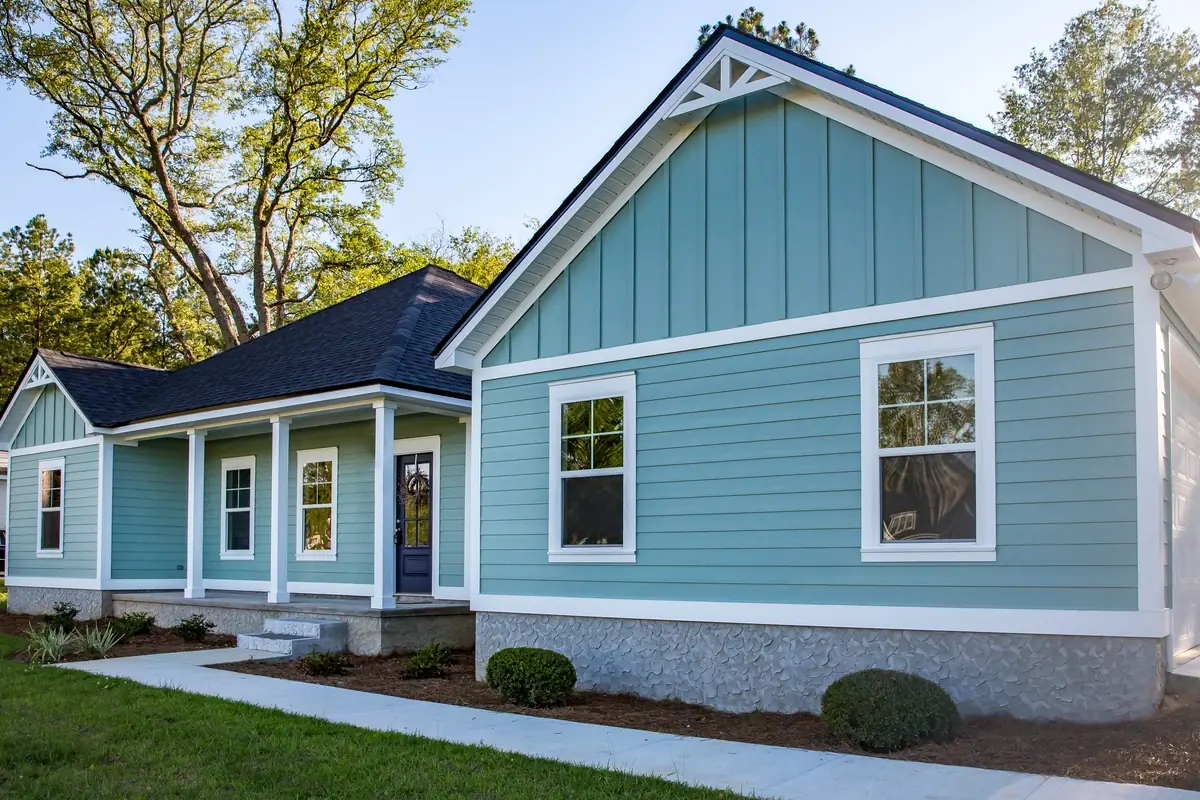
Your siding installation labor rates make up roughly 45% to 55% of your total project invoice. While supply houses sell raw panels at fairly predictable wholesale prices, crew wages swing widely based on local overhead and job difficulty. If you want to see how labor combines with raw materials into full bundle pricing, check our siding installation price per square guide.
Typical hourly and per-square rates
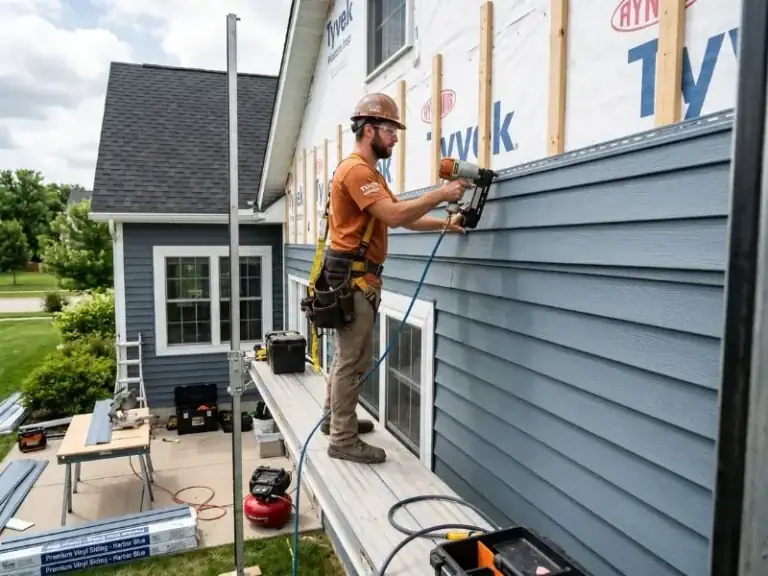
Experienced exterior installers rarely bill homeowners by the clock because hourly tracking slows down bids. Instead, crews price jobs by the 100-square-foot square, which works out to $250 to $650 per square for standard installation (roughly equivalent to $45 to $85 per worker hour when you factor in insurance and truck overhead). For a closer look at single-foot totals across every major cladding type, review our siding installation price per square foot breakdown.
How rates vary by region
Local living costs, workers’ compensation insurance, and municipal permit rules shift labor bills across state lines. According to wage data from the U.S. Bureau of Labor Statistics (BLS Carpenter Occupational Outlook), exterior carpenters and cladding installers in coastal metro areas earn 20% to 30% more than crews in the Midwest or South.
High-cost coastal metros
In states like California, Massachusetts, and Washington, expect crew labor alone to run $4.50 to $7.50 per square foot. Steep liability premiums and strict city inspection schedules add overhead to every local contractor’s bid.
Midwest and Southern markets
Crews in Texas, Ohio, and Georgia typically charge $2.25 to $4.75 per square foot for standard residential work. Milder weather windows and lower business overhead help keep these regional rates steady year-round.
Why Labor Rates Differ by Material
Not all exterior panels hang at the same speed. Light polymer sheets snap together rapidly with basic hand tools, whereas heavy cement-cellulose planks demand two-person lifts and specialized dust-collection saws.
| Cladding Material | Labor Only (Per Sq. Ft.) | Labor Only (Per Square) | Average Crew Speed |
| Standard Vinyl Lap | $2.20 – $3.80 | $220 – $380 | 3 – 4 squares/day |
| Insulated Vinyl | $2.75 – $4.50 | $275 – $450 | 2.5 – 3.5 squares/day |
| Engineered Wood | $3.25 – $5.25 | $325 – $525 | 2 – 3 squares/day |
| James Hardie Fiber Cement | $4.00 – $6.50 | $400 – $650 | 1.5 – 2.5 squares/day |
| Standing Seam Metal | $4.50 – $7.25 | $450 – $725 | 1.5 – 2.5 squares/day |
Vinyl and metal: faster installs
Standard vinyl panels weigh very little, letting a three-person crew cover 300 to 400 square feet of flat wall per day. Factory roll-formed metal panels also cover tall vertical runs quickly once laser-leveled starter tracks are anchored. Check our vinyl siding installation price guide if you want to see how fast polymer labor keeps whole-house budgets low.
Fiber cement and wood: skill and time premiums
Fiber cement boards weigh roughly 2.3 pounds per square foot and snap easily if carried flat by one worker. Installers must use HEPA-filtered shears, install metal flashing behind every butt joint, and follow strict nailing clearances, which nearly doubles crew hours compared to vinyl.
Project Factors That Change Labor Pricing
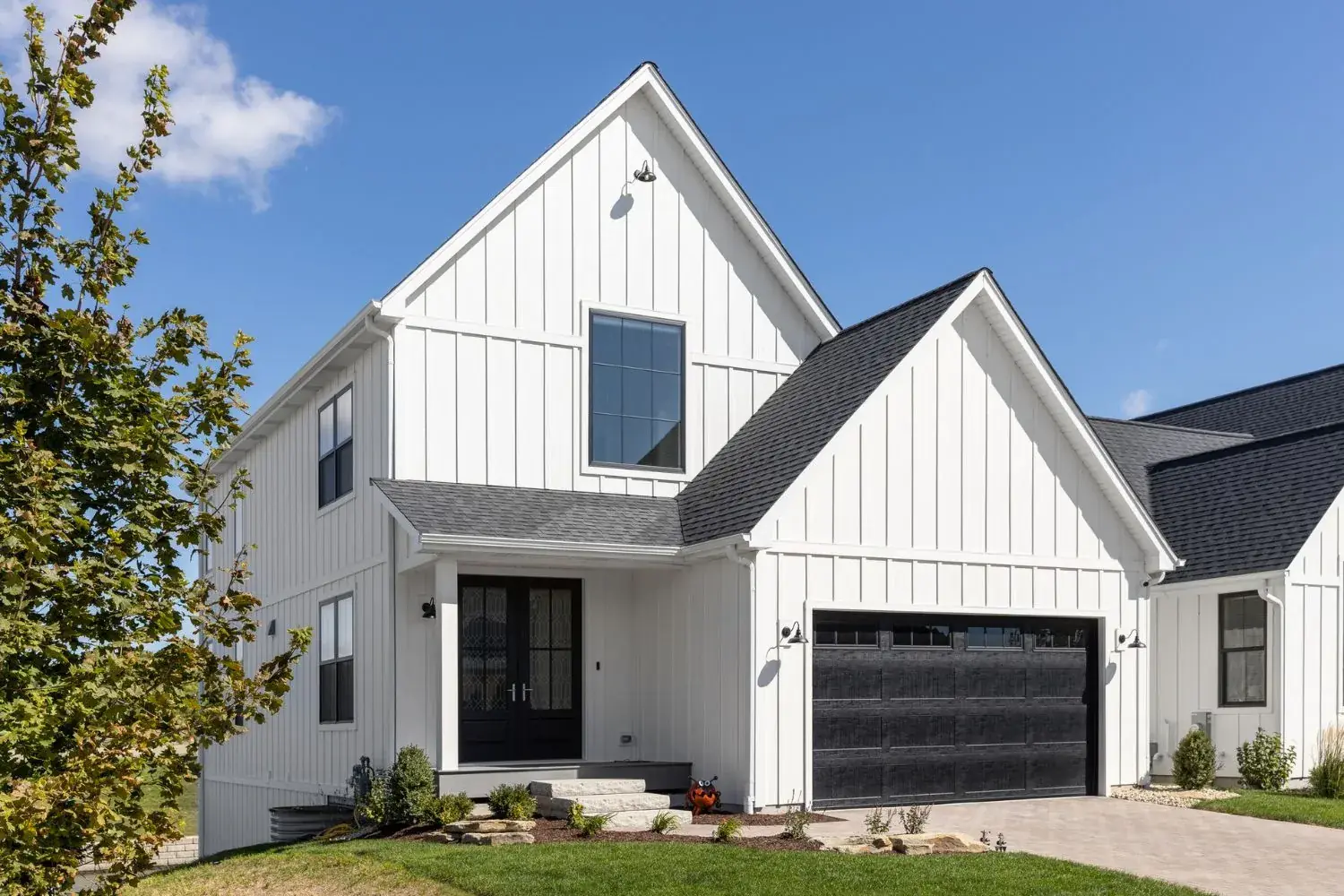
Two homes with identical square footage can carry labor bills that differ by $4,500. Wall height, old cladding demolition, and architectural trim details drive those price gaps.
Tear-off and disposal labor
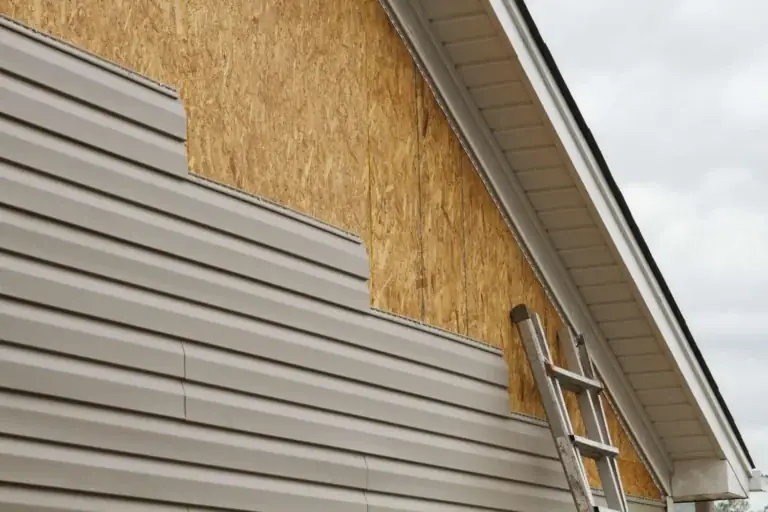
Base installation quotes often assume crews are hanging panels over clean, bare wall sheathing. Stripping aged wood clapboards or brittle vinyl off your walls adds significant demolition and hauling labor before a single new board goes up.
-
Old cladding removal: $0.65 to $1.35 per square foot to pry off old boards and pull stubborn nails.
-
Dumpster loading and haul-away: $0.35 to $0.70 per square foot for 20-yard roll-off container rental and landfill fees.
-
Woven house wrap and seam taping: $0.35 to $0.60 per square foot to seal the wall assembly against wind-driven rain.
-
Rotted sheathing replacement: $80 to $115 per 4×8 sheet of OSB or CDX plywood when crews find water damage around window sills.
Height, access, and wall complexity
A single-story rectangular ranch moves fast because installers work safely off low stepladders. Multi-story homes with steep roof pitches and dozens of window cutouts force crews to spend hours on safety rigging and custom trim cuts.
Two-story pump-jack scaffolding
Setting up aluminum pump-jack poles, walk boards, and fall-arrest harnesses adds $0.90 to $1.50 per square foot to upper-story wall sections. Crews also need clear driveway or yard access to anchor poles safely into solid ground.
Dormers, bay windows, and aluminum trim wraps
Houses with 16 or more windows require hundreds of precision J-channel and trim cuts. Custom-bending PVC-coated aluminum coil over exposed wood window casings adds $120 to $220 per window opening in skilled brake-work labor.
Paying Fair Labor Rates for Quality Work
Trying to save $2,000 by hiring the lowest-priced handyman on a classified board usually costs twice as much to fix later. When I inspected a buckled vinyl job in Michigan last spring, the budget crew had nailed every panel tight to the wall, leaving zero room for summer heat expansion.
What experienced crews deliver for the money
Established exterior contractors carry active workers’ compensation and general liability policies so you are never liable if a worker falls off a ladder. They also follow Vinyl Siding Institute (VSI installation standards) and manufacturer nailing specs, keeping your 30-year to lifetime product warranties intact.
Beware of the cheapest labor bid
An unusually cheap labor quote almost always means the crew plans to skip critical weatherproofing steps or cut corners on trim flashing. Watch for these two warning signs before signing any contract.
Missing workmanship warranties
Manufacturer warranties only replace defective boards, never crew wages if panels warp or blow off during a storm. Insist on a written five-year labor workmanship guarantee directly from your contractor.
Uninsured cash-only subcontractors
If a bidding company cannot hand you a current certificate of insurance naming your property, walk away immediately. Legitimate exterior crews price their labor fairly to cover proper safety gear, payroll taxes, and multi-year service accountability.
Frequently Asked Questions
What are the average siding installation labor rates per square foot in 2026?
Most homeowners pay between $2.50 and $6.50 per square foot ($250 to $650 per square) for siding installation labor in 2026. Lightweight vinyl sits near the lower end of that range, while heavy fiber cement and standing seam metal reach the top.
How much does labor cost to reside a 2,000-square-foot house?
Labor alone for a 2,000-square-foot home typically costs $4,500 to $12,000, depending on material choice and story height. Adding old siding tear-off, house wrap, and custom aluminum window wrapping adds another $2,500 to $5,000 in crew wages.
Do siding contractors charge by the hour or by the square?
Almost all professional siding contractors charge by the square (100 square feet of wall surface) rather than by the hour. Per-square pricing protects homeowners from paying extra if a crew works slowly or hits minor weather delays.
How can I save money on siding installation labor rates?
Booking your project during late fall or winter (November through February) often unlocks 8% to 15% seasonal discounts because crews want to keep full-time installers busy. You can also save $1,000 to $2,000 by handling basic shrub trimming and yard clearing before the crew arrives.
Compare Itemized Siding Labor Bids Today
Knowing real siding installation labor rates helps you separate skilled exterior pros from corner-cutting lowballers before you sign a contract. Measure your exterior wall area this week, ask at least three licensed local contractors for itemized bids that separate material costs from labor and tear-off fees, and request your free on-site quote today to lock in fair 2026 pricing.