Vinyl Siding Installation Price: What Homeowners Pay
Knowing the average vinyl siding installation price stops you from signing a bloated contract when your exterior starts warping or fading. Last month, I reviewed five contractor bids for a 1,850-square-foot split-level in Michigan, and the quotes ranged from $9,400 to $16,800 for nearly identical lap panels. Most homeowners spend between $6,400 and $18,400 total for a full house wrap and installation, though panel thickness and wall prep shift that figure fast.
Typical Vinyl Siding Installation Price in 2026
Your total vinyl siding installation price depends heavily on panel gauge and how much exterior wall surface your home actually has. Contractors calculate material orders using 100-square-foot units, so if you prefer seeing wholesale bundle rates first, check our breakdown of vinyl siding install price per square.
Price ranges by siding grade and thickness
Thin builder-grade panels cost less at the supply counter, yet they dent easily during hailstorms and show wavy lines over uneven studs. Thick residential profiles cost a couple dollars more per square foot and stay flat across wide wall spans.
| Vinyl Siding Grade | Panel Thickness | Installed Price (Per Sq. Ft.) | Typical Lifespan |
| Builder Grade | 0.040 in. | $3.50 – $5.00 | 15 – 20 years |
| Standard Residential | 0.044 in. | $4.50 – $6.50 | 20 – 25 years |
| Heavy-Duty Residential | 0.046 in. | $5.50 – $7.50 | 25 – 35 years |
| Insulated Foam-Backed | 0.050+ in. | $7.50 – $12.00 | 30 – 40 years |
Total costs for average home sizes
Interior floor square footage rarely matches exterior wall area, because tall ceilings and gable peaks add extra cladding surface. A single-story 1,500-square-foot ranch usually costs $7,500 to $13,500 to reside, while a two-story 2,500-square-foot colonial runs $13,000 to $24,500. For a broader look at how vinyl compares against fiber cement or steel, review our siding installation price per square foot guide.
What’s Included in the Installation Price
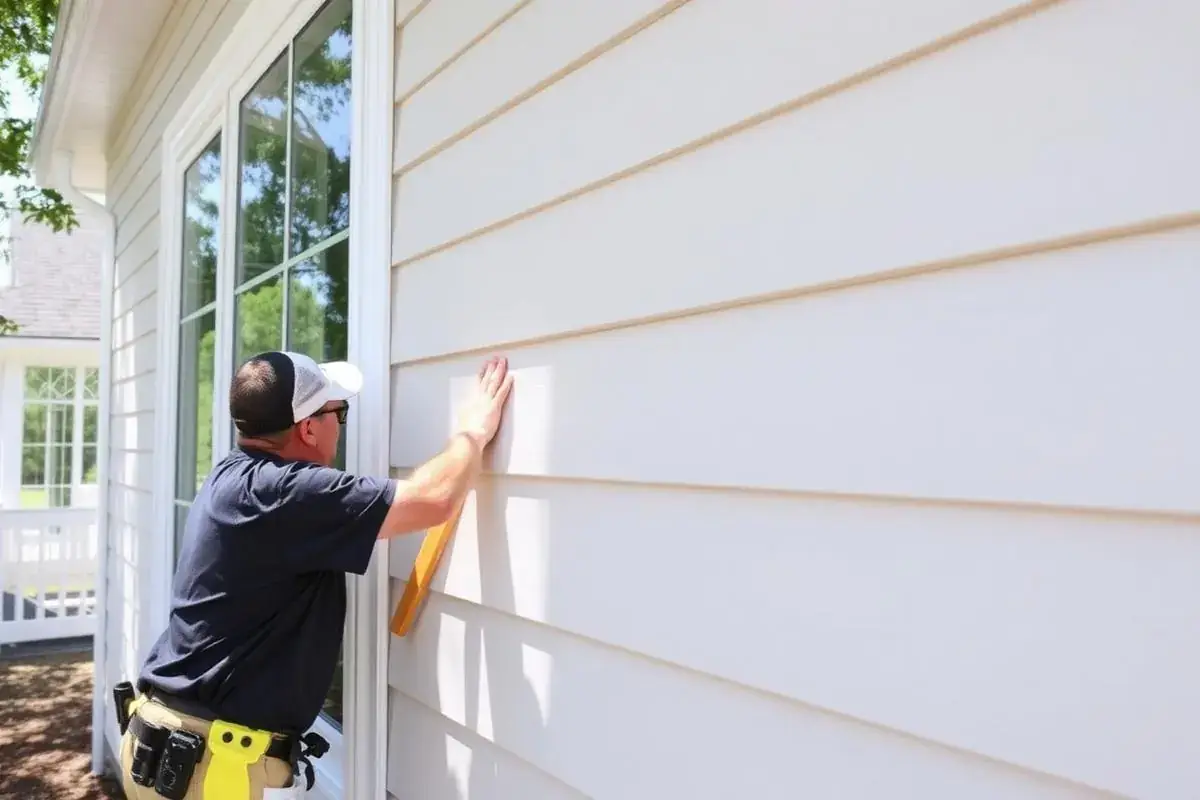
A trustworthy bid covers far more than boxes of horizontal clapboard panels stacked in your driveway. Before you compare bottom-line numbers, verify that every line item below sits inside your written scope of work.
Materials, trim, and accessories
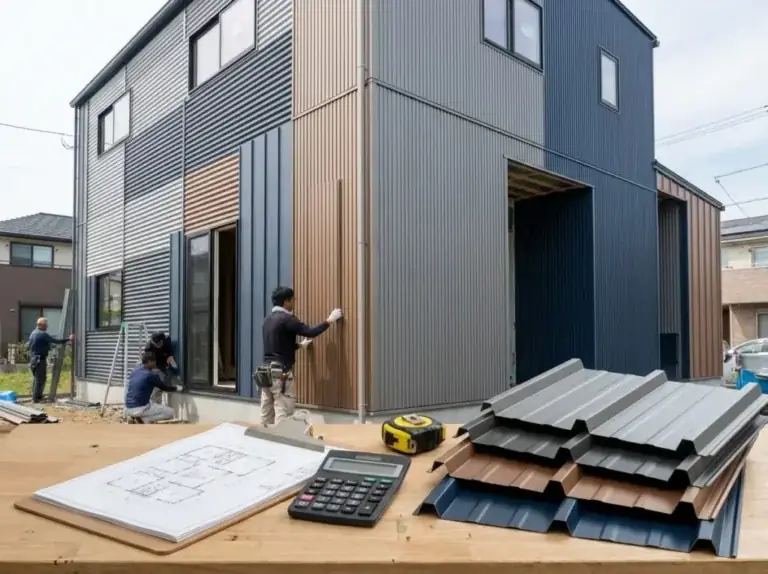
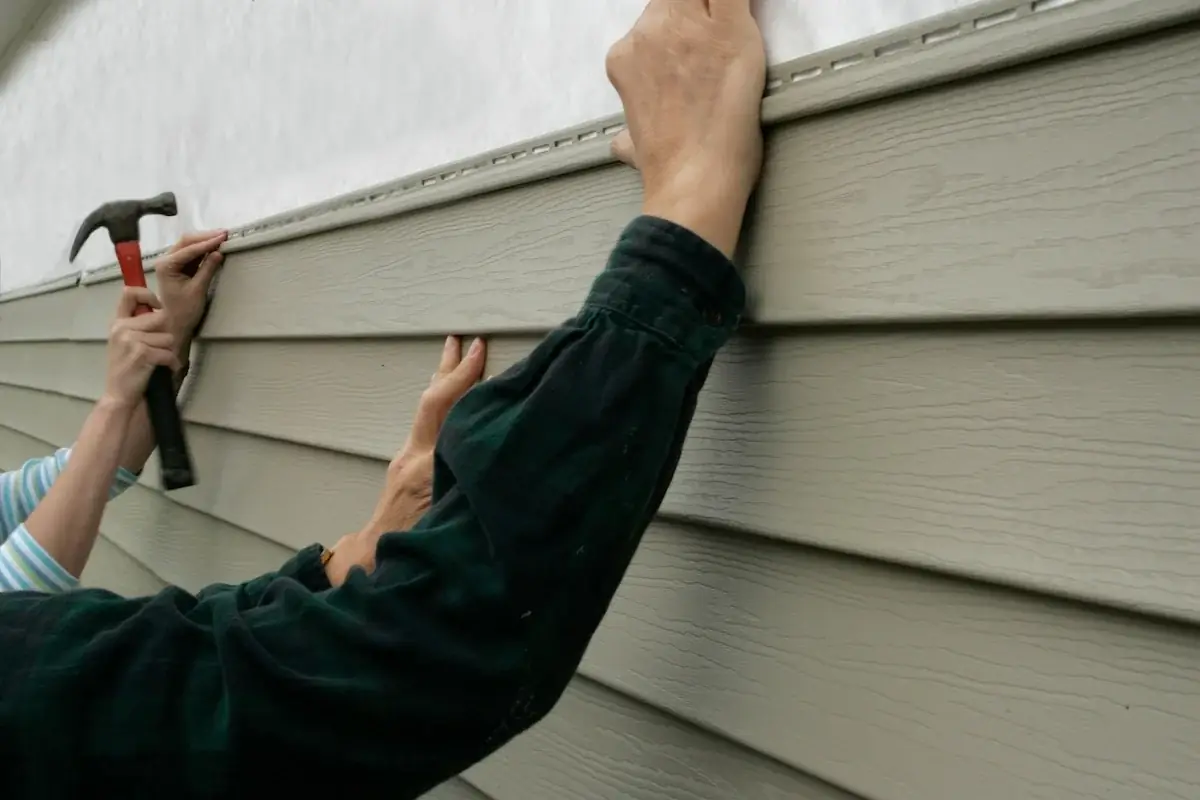
Flat wall panels account for roughly 70% of your material order, while perimeter trim pieces make up the rest. Crews need starter strips along the bottom sill, J-channels around every window frame, inside and outside corner posts, and utility blocks for hose bibs and light fixtures.
-
Weather-resistive barrier: Woven house wrap and seam tape ($0.40 to $0.85 per square foot installed).
-
Aluminum coil trim: Custom-bent metal wraps covering exposed wood window casings and fascia boards.
-
Vented soffit panels: Perforated vinyl panels under roof eaves to keep attic airflow moving.
-
Hot-dipped galvanized nails: Corrosion-resistant roofing nails driven loosely so panels can slide during temperature swings.
Labor, tear-off, and site cleanup
Crew wages make up 40% to 50% of your total project bill. Standard quotes include stripping old cladding, hauling debris to a landfill, and running a magnetic roller across your lawn to pick up dropped nails.
Old cladding removal and dumpster fees
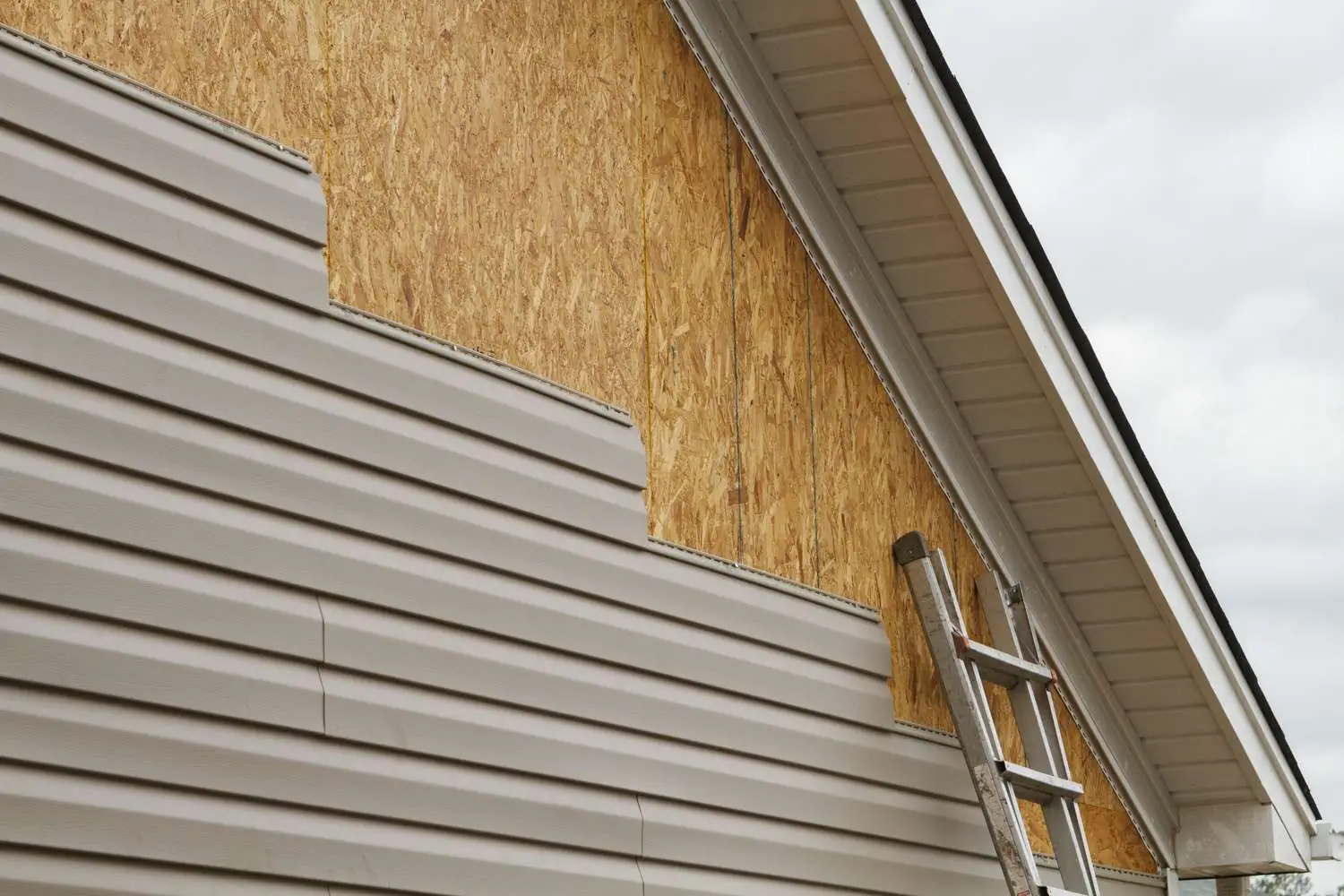
Tearing off brittle vinyl or old wood lap costs $0.75 to $1.50 per square foot, plus $350 to $550 for a 20-yard roll-off dumpster. If your home has two layers of aged siding nailed over original wood clapboards, expect that demo charge to double.
Sheathing inspection and wood rot repair
Once old boards come off, installers often spot soft plywood around leaky window sills or bottom plates. Replacing rotted OSB or CDX plywood sheathing runs $80 to $115 per 4×8 sheet installed.
Factors That Change Your Final Bill
Two neighbors on the same block can get wildly different quotes depending on the panel profile and house geometry they choose. According to Zonda’s Remodeling Cost vs. Value Report, midrange vinyl siding replacement recoups roughly 96.5% of its job cost at resale, making smart material selection a direct boost to home equity.
Insulated vinyl vs. standard panels
Insulated vinyl pairs a thick outer shell with contoured expanded polystyrene foam laminated to the back. It costs $2.50 to $4.50 more per square foot than hollow panels, yet it adds an R-2 to R-3 thermal barrier, quiets outside road noise, and resists denting from stray baseballs or hail.
Home height, layout, and existing siding condition
Simple rectangular ranch homes go up fast because crews work safely from short stepladders. Complex architecture forces installers to slow down and build custom trim transitions.
Two-story scaffolding and pump jacks
Working on second-story gables requires aluminum pump-jack poles, walk boards, and safety harnesses. That setup adds $0.90 to $1.50 per square foot to upper wall sections compared to ground-level walls.
Dormers, bay windows, and board-and-batten accents
Vertical board-and-batten siding or vinyl shake gables require extra furring strips, J-channels, and precision miter cuts. Mixing shake accents into your front facade typically adds $1,200 to $2,800 to the overall job.
Saving Money Without Cutting Corners
Cutting costs by hiring an uninsured crew or buying paper-thin 0.040-inch panels usually backfires within five summers. Instead, focus on smart timing and contract terms that protect your exterior envelope. If your contractor prices jobs in 100-square-foot blocks, compare their math against our siding installation price per square guide before negotiating.
Off-season scheduling and contractor availability
Exterior companies see a huge rush between April and August, which keeps labor rates at their peak. Booking your installation between November and February often unlocks 8% to 15% off-season discounts because crews want to keep full-time installers busy through winter.
Warranty terms worth paying a little more for
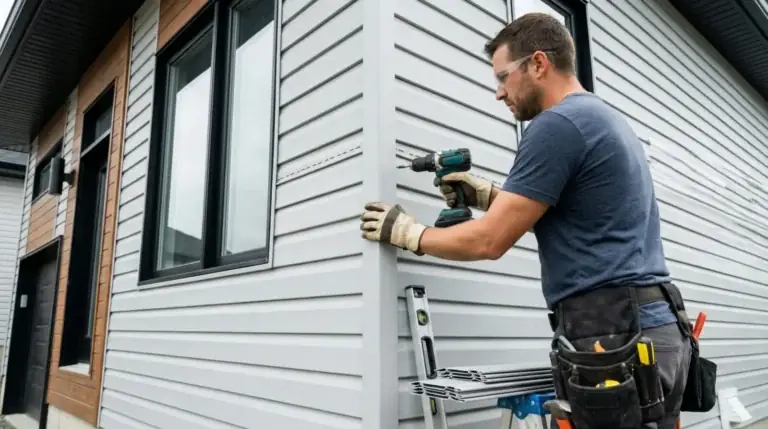
Never let an installer fasten panels tight against the sheathing, because vinyl expands up to 1/2 inch on hot July afternoons. Confirm your contractor follows the Vinyl Siding Institute (VSI installation guidelines), which require leaving a 1/32-inch nail gap and 1/4-inch clearance at trim pockets.
Transferable lifetime material coverage
Top manufacturers like CertainTeed, Mastic, and Royal Building Products offer lifetime fade and hail warranties on heavy-duty lines. Check whether that warranty transfers to the next buyer if you sell your house within ten years.
Multi-year labor workmanship guarantees
Factory warranties never pay for crew hours if panels buckle from bad nailing. Insist on a written five-year workmanship guarantee from your contractor so any loose trim or wind blow-offs get fixed free.
Frequently Asked Questions
What is the average vinyl siding installation price for a 2,000-square-foot home?
Most homeowners pay between $10,500 and $19,500 installed for a 2,000-square-foot house, depending on whether it has one or two stories. A 2,000-square-foot home typically has 1,700 to 2,100 square feet of actual exterior wall area after subtracting garages and large windows.
Can you install new vinyl siding directly over old siding?
Yes, crews can install new vinyl over flat, dry existing siding by adding rigid foam insulation board first. This skips $1,000 to $2,200 in tear-off fees, though it prevents installers from inspecting your wood sheathing for hidden water rot.
How long does vinyl siding installation take?
A three-person crew usually finishes a standard single-family home in four to seven working days. Bad weather, extensive wood-rot repairs, or custom aluminum window wrapping can add two or three extra days to the schedule.
Does vinyl siding installation price include window wrapping and soffits?
Basic bids cover flat wall panels, corner posts, and window J-channels, while custom aluminum window coil wrapping and new vinyl soffits are often priced as separate add-ons. Always ask your estimator to list window wraps and fascia covers explicitly on the quote.
Compare Local Vinyl Siding Quotes Today
Getting an accurate vinyl siding installation price starts with measuring your exterior wall area and requesting itemized bids from at least three licensed local contractors. Ask each crew to specify panel thickness, house wrap brand, and per-sheet wood-rot rates in writing, then schedule your free on-site estimate today before peak seasonal schedules book out.