Hardie Siding Install Price: What to Expect in 2026
Knowing the real Hardie siding install price keeps you from getting blindsided when fiber cement quotes come in nearly double what you budgeted for vinyl. Last fall, I audited three bids for a 2,100-square-foot colonial in North Carolina, and the estimates jumped from $18,500 to $29,400 simply because one contractor priced pre-primed boards while another included factory ColorPlus finishes and trim. Most homeowners pay between $1,000 and $1,600 per square (or $10 to $16 per square foot) installed in 2026, depending on board style and local crew rates.
Hardie Siding Install Price at a Glance
Your Hardie siding install price combines dense cement-cellulose planks, corrosion-resistant fasteners, and specialized dust-controlled cutting labor. Unlike lightweight plastic panels that one worker can carry under an arm, fiber cement boards weigh roughly 2.3 pounds per square foot and demand methodical two-person handling. If you want to compare how standard 100-square-foot units are measured across all cladding types, check our siding installation price per square guide.
Per-square and whole-home cost ranges
A single-story 1,500-square-foot ranch typically runs $14,000 to $22,500 for full James Hardie installation, while a two-story 2,500-square-foot home lands between $22,000 and $38,000. Those figures assume standard wall geometry, house wrap replacement, and basic corner trim, though steep gables or custom window casings push the total higher. For a quick look at smaller unit numbers across materials, see our siding installation price per square foot breakdown.
Why Hardie costs more than vinyl
Polymer siding snaps together loosely with roofing nails, whereas fiber cement requires precision butt-joint flashing, exact 1/8-inch clearance above roof flashings, and carbide-tipped saw blades. You also pay for raw material density, since Portland cement, sand, and wood pulp cost far more to manufacture and ship than extruded PVC. Review our vinyl siding installation price guide if you want to weigh upfront savings against long-term durability.
Material Costs for James Hardie Products
Material orders account for roughly 35% to 45% of your total project invoice. Choosing between raw primed planks and factory-baked finishes makes the biggest immediate dent in your supply-house receipt.
| James Hardie Product | Material Only (Per Square) | Installed Total (Per Square) | Best Architectural Fit |
| HardiePlank Lap (Primed) | $180 – $320 | $950 – $1,350 | Traditional, ranch, colonial |
| HardiePlank Lap (ColorPlus) | $250 – $450 | $1,100 – $1,550 | Low-maintenance exteriors |
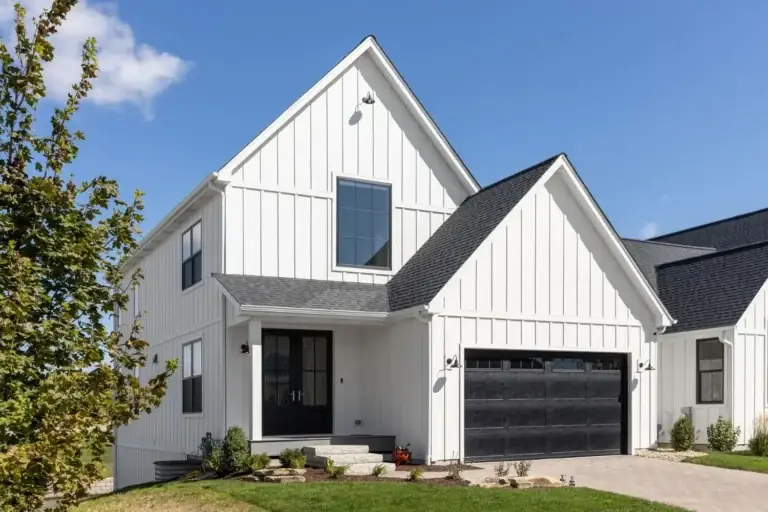
| HardiePanel Vertical + Batten | $260 – $480 | $1,150 – $1,650 | Modern farmhouse, contemporary |
| HardieShingle Staggered/Straight | $350 – $620 | $1,350 – $1,850 | Craftsman gables, Cape Cod |
HardiePlank lap siding pricing
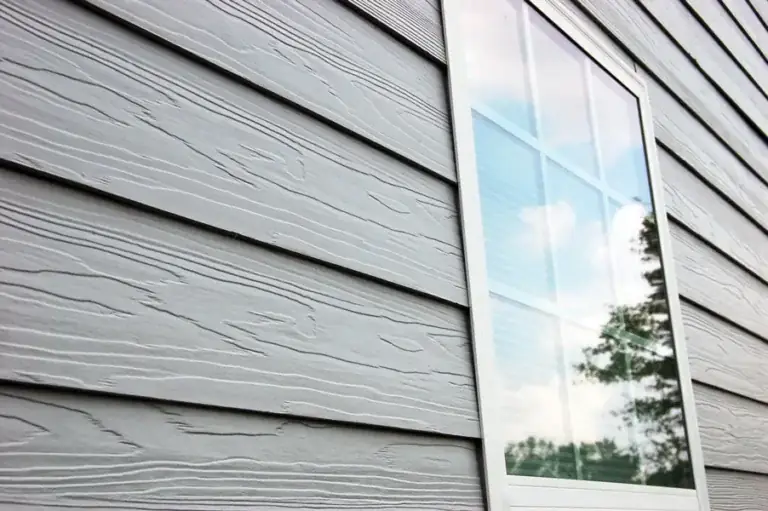
Standard 8.25-inch HardiePlank lap siding is the workhorse of the catalog, running $180 to $320 per square for primed boards. Upgrading to baked-on ColorPlus technology adds $70 to $130 per square upfront, yet it eliminates the $3,500 to $5,500 exterior paint job you would otherwise pay for immediately after installation.
Trim boards, shingles, and panel options
Flat wall planks never finish an exterior envelope on their own. You also need HardieTrim 5/4 boards around windows and corners, plus matching soffit panels under roof eaves.
-
HardieTrim boards (3.5 in. to 11.25 in.): $2.50 to $5.50 per linear foot for materials, framing every window, door, and outside corner.
-
HardieSoffit vented panels: $3.00 to $5.00 per square foot installed to keep attic intake airflow moving cleanly.
-
HardieShingle accent siding: $350 to $620 per square for materials, usually installed in front gable peaks for visual contrast.
-
Color-matched elastomeric caulk: $12 to $18 per tube, required at every vertical trim joint where planks meet casing boards.
Labor Behind the Install Price
Crew labor makes up 55% to 65% of a fiber cement contract. Hiring a general handyman who treats Hardie like wood lap is the fastest way to void your 30-year substrate warranty.
Why fiber cement demands skilled crews
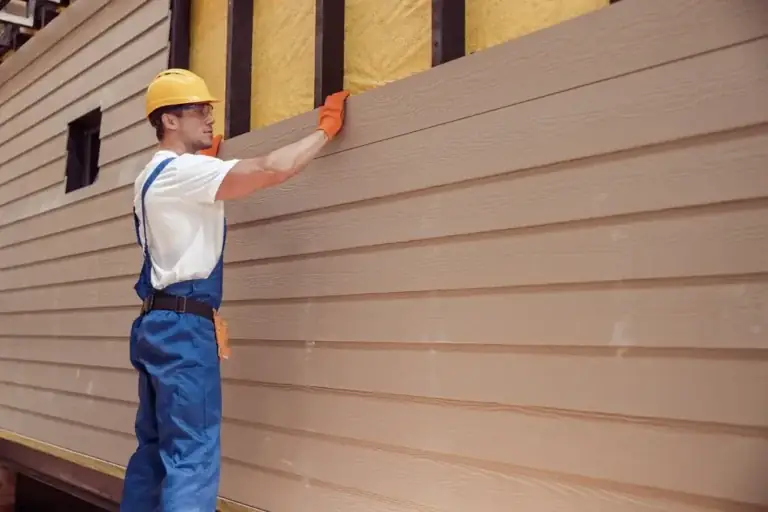
Cutting fiber cement releases respirable crystalline silica dust, which requires OSHA-compliant HEPA vacuum shears or dust-shrouded saws on every job site. Installers must also space nails accurately and install joint flashing behind every plank butt seam rather than caulking vertical joints shut.
Install method: blind nailing vs. face nailing
How a crew drives fasteners changes both the finished look of your walls and how well boards hold during severe windstorms. Always ask your estimator which fastening method their crew uses before signing.
Blind nailing for clean aesthetics
Installers drive nails near the top edge of each plank so the next overlapping course covers the fastener heads completely. This leaves a smooth, uninterrupted shadow line across your walls, though high-wind coastal zones often require different fastening rules.
Face nailing for coastal wind zones
Crews drive stainless-steel or hot-dipped galvanized nails through the lower overlap of each board, locking both planks directly into the wall studs. Face nailing is mandatory in hurricane-prone HZ10 regions and requires touch-up paint over exposed nail heads.
Is the Higher Price Worth It
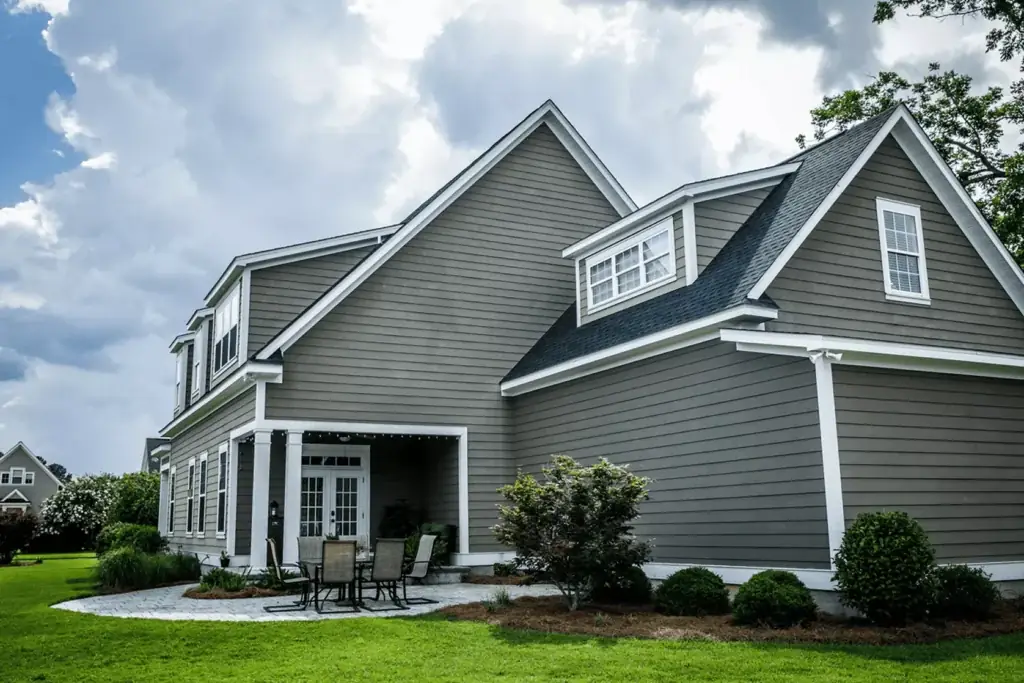
Spending $25,000 on fiber cement instead of $13,000 on vinyl hurts upfront, so the numbers only make sense if you plan to stay put or live in a harsh climate. When I inspected a 14-year-old Hardie installation in coastal Georgia last spring, the ColorPlus finish still looked freshly painted while neighboring vinyl homes showed noticeable sun chalking.
Lifespan, resale value, and insurance benefits
Properly installed James Hardie siding lasts 30 to 50 years and carries a 30-year non-prorated substrate warranty. According to the Remodeling Cost vs. Value Report published by Zonda, fiber cement siding replacement consistently ranks among the top exterior projects for resale return, recouping roughly 88% to 90% of its cost at closing.
Where Hardie pays off most by climate
James Hardie engineers separate board formulations for freezing northern winters (HZ5) and hot, humid southern coasts (HZ10). Matching the right product zone to your zip code prevents moisture swelling and freeze-thaw cracking.
Wildfire and hail-prone regions
Fiber cement is non-combustible and earns a Class A fire rating under ASTM E84 testing, which helps homeowners in western wildfire corridors qualify for lower insurance premiums. It also shrugs off wind-driven hail that cracks brittle cold-weather vinyl.
High-humidity and termite zones
Unlike cedar or engineered wood, cement-based planks give carpenter ants, termites, and woodpeckers nothing to eat or nest in. Following the official James Hardie installation requirements for ground and roof clearance keeps moisture from wicking into bottom edges over decades of heavy rain.
Frequently Asked Questions
What is the average Hardie siding install price per square in 2026?
Most homeowners pay between $1,000 and $1,600 per square ($10 to $16 per square foot) installed in 2026. Pre-primed lap siding lands near the lower end, while factory-finished ColorPlus boards and custom trim sit near the top.
How much does it cost to install Hardie siding on a 2,000-square-foot house?
A full James Hardie replacement on a 2,000-square-foot home typically costs $18,000 to $30,000 including tear-off, house wrap, and standard trim. Two-story layouts, complex dormers, and rotted plywood sheathing repairs push the final bill toward the upper range.
Is ColorPlus worth the extra cost over primed Hardie siding?
Yes, paying $1.00 to $1.50 more per square foot for ColorPlus factory finish usually saves money compared to hiring painters on-site. Factory baking cures multiple coats evenly and includes a 15-year limited finish warranty against peeling and chipping.
How long does James Hardie siding last before needing replacement?
James Hardie fiber cement siding lasts 30 to 50 years with basic garden-hose washing and occasional caulk touch-ups. Unlike wood lap siding that needs repainting every five to seven years, ColorPlus boards typically go 15 years or longer before requiring a fresh coat.
Get Accurate Hardie Siding Quotes Before You Commit
Comparing your Hardie siding install price across at least three certified fiber cement contractors protects you from sloppy nailing shortcuts and vague trim allowances. Measure your exterior walls this week, request itemized bids that specify HZ5 or HZ10 ColorPlus boards alongside per-sheet wood-rot rates, and book your free on-site consultation today to lock in current 2026 material pricing.