Siding Installation Labor: Costs, Timelines & Hiring
Understanding what goes into siding installation labor keeps you from overpaying when exterior contractors hand you a single lump-sum bid. Last spring, I audited four estimates for a 2,100-square-foot colonial in Indiana, and the labor portions swung by nearly $5,500 simply because two crews padded their tear-off and window-trim hours. Most homeowners pay between $200 and $650 per square ($2.00 to $6.50 per square foot) in crew wages in 2026, depending on wall material and house height.
What Siding Installation Labor Involves
Your siding installation labor bill covers far more than nailing flat panels onto bare wall studs. Experienced exterior crews follow a strict sequence of demolition, moisture sealing, and custom metal bending before the first decorative plank goes up. If you want to see how crew wages combine with raw materials into complete bundle figures, check our siding installation price per square guide.
Prep, tear-off, and house wrap stages
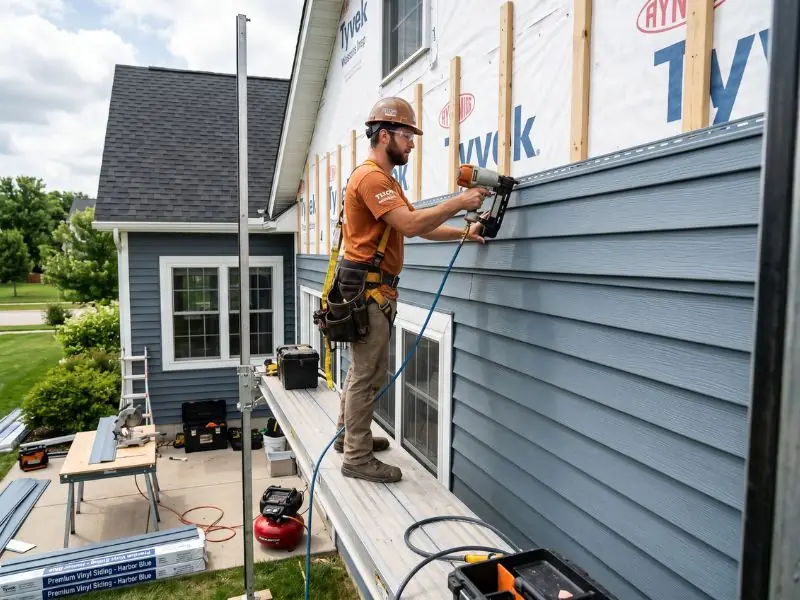
Crews start by stripping brittle vinyl or nailed wood boards, hauling debris into a roll-off dumpster, and inspecting your plywood sheathing for hidden water rot. Next, they staple woven house wrap across the walls and seal every vertical seam with flashing tape so wind-driven rain never reaches your framing.
Install, trim, and finish work explained
Once the weather-resistive barrier is tight, installers snap chalk lines, nail starter strips along the bottom sill, and mount inside and outside corner posts. They finish by fitting window J-channels, bending custom aluminum coil over exposed wood casings, and running a magnetic roller across your yard to collect dropped nails.
-
Old cladding removal and haul-away: $100 to $200 per square to strip aged siding and cover landfill tipping fees.
-
Sheathing rot replacement: $80 to $115 per 4×8 sheet of OSB or CDX plywood when crews uncover soft wood around window sills.
-
House wrap and seam taping: $35 to $65 per square installed to create a continuous drainage plane.
-
Aluminum window coil wrapping: $120 to $220 per window opening for custom-bent protective trim covers.
How Much Labor Costs and How Long It Takes
Crew wages usually account for 45% to 55% of your total project invoice. While material prices stay fairly consistent across supply houses, labor hours fluctuate based on building geometry and regional wage rates.
Typical labor pricing per square
Exterior contractors almost always price jobs by the 100-square-foot square rather than billing homeowners by the clock. Standard vinyl labor runs $220 to $380 per square, whereas heavy fiber cement and standing seam steel push crew wages to $400 to $650 per square. For a closer look at single-foot rates across every cladding option, review our siding installation price per square foot breakdown.
| Cladding Material | Labor Only (Per Square) | Labor Only (Per Sq. Ft.) | Average Crew Timeline (2,000 Sq. Ft. Home) |
| Standard Vinyl Lap | $220 – $380 | $2.20 – $3.80 | 4 – 5 working days |
| Insulated Vinyl | $275 – $450 | $2.75 – $4.50 | 5 – 6 working days |
| Engineered Wood | $325 – $525 | $3.25 – $5.25 | 6 – 8 working days |
| Fiber Cement | $400 – $650 | $4.00 – $6.50 | 7 – 10 working days |
| Standing Seam Metal | $450 – $725 | $4.50 – $7.25 | 7 – 10 working days |
Realistic timelines by home size
A skilled three-person crew completes a single-story 1,500-square-foot ranch in roughly four working days when weather cooperates. A two-story 2,500-square-foot colonial with dormers, bay windows, and full tear-off takes seven to twelve days because crews must rig aluminum pump-jack scaffolding and make hundreds of custom angle cuts. Check our vinyl siding installation price guide if you want to compare polymer crew timelines against whole-house material budgets.
Choosing the Right Labor for Your Material
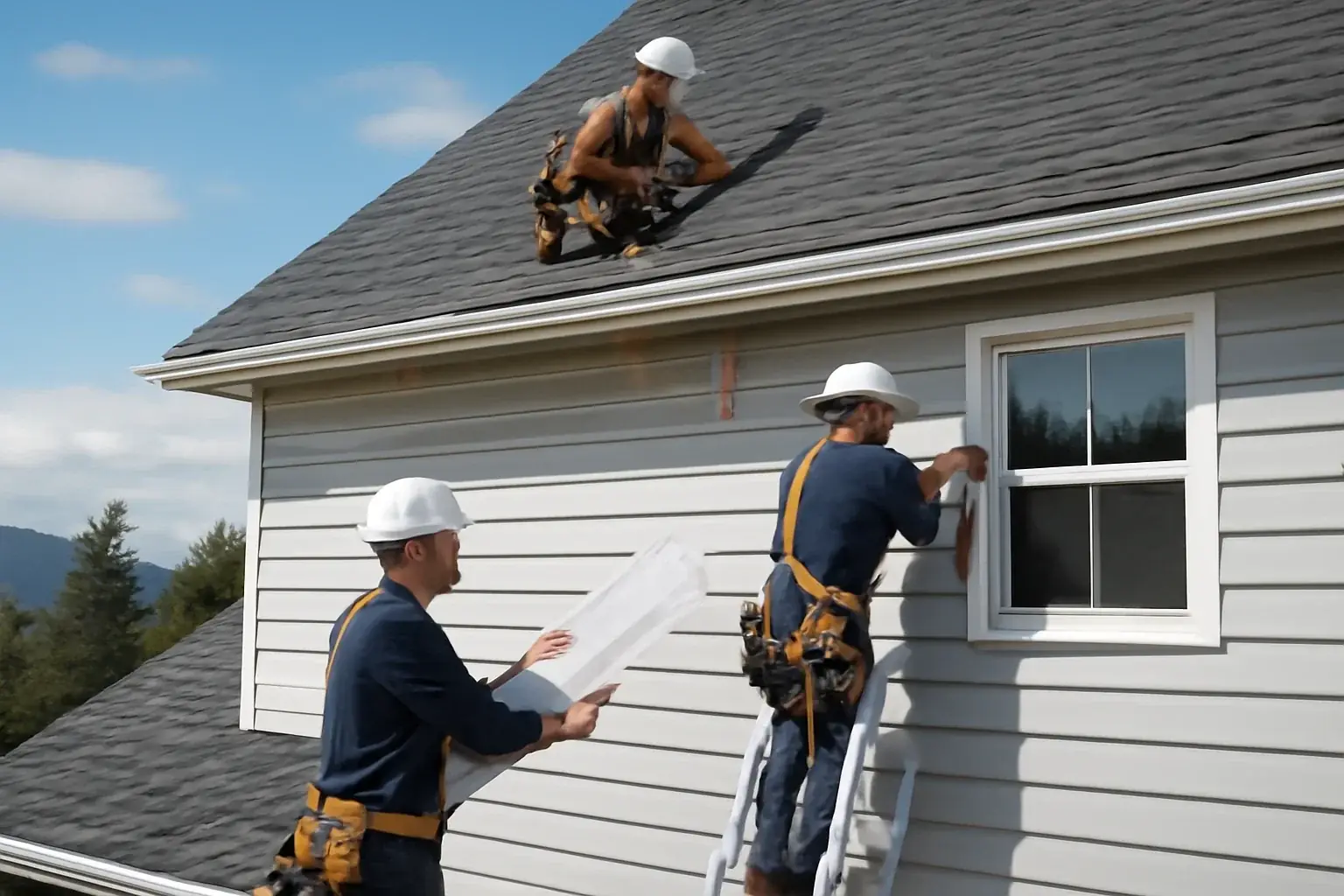
Not every general handyman or roofing crew knows how to hang specialized exterior cladding properly. Hiring an installer unfamiliar with your specific material’s expansion rules is the fastest way to void a 30-year manufacturer warranty.
Certified installers for fiber cement
Fiber cement boards weigh roughly 2.3 pounds per square foot and snap easily if carried flat by one person. Certified installers use OSHA-compliant HEPA dust-extraction shears, install metal flashing behind every vertical butt joint, and keep exact 1/8-inch clearances above roof flashings to prevent moisture wicking.
Why experience matters for metal panel systems
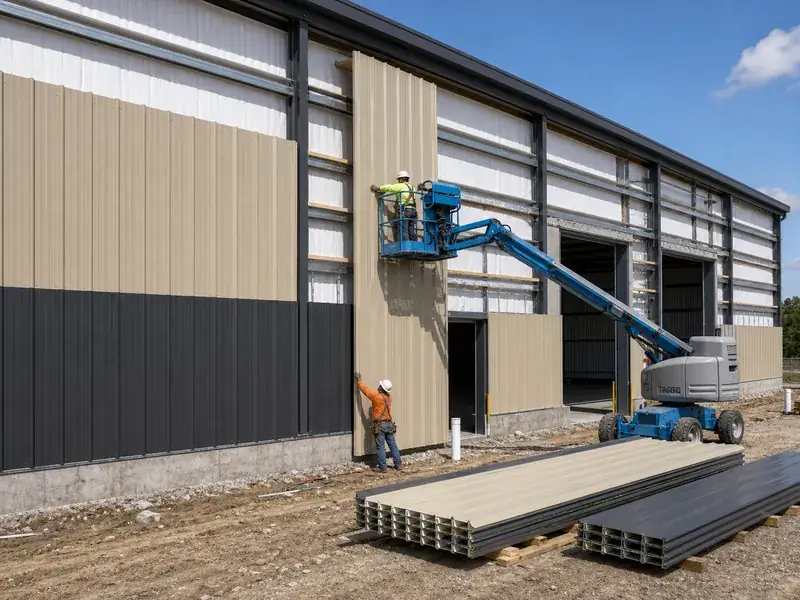
Architectural steel and aluminum panels expand and contract visibly during hot summer afternoons. Skilled metal crews use slotted fastener holes, precision sheet-metal brakes, and laser levels so wide wall spans stay crisp without wavy “oil canning” distortion.
Vinyl thermal expansion clearances
Even standard polymer panels expand up to 1/2 inch in summer heat. Verify your crew follows the Vinyl Siding Institute (VSI installation manual) rules, leaving a 1/32-inch gap under nail heads so panels slide freely without buckling.
Proper flashing and moisture kick-outs
Experienced crews install aluminum kick-out flashing where rooflines meet vertical walls, directing rainwater into gutters instead of behind your new siding.
Hiring and Managing Your Installation Crew
Vetting your installation crew carefully protects both your property and your wallet before a single box of siding hits your driveway. According to wage data from the U.S. Bureau of Labor Statistics (BLS Carpenters Outlook), skilled exterior carpenters command strong wages because proper weatherproofing requires specialized trade training.
Vetting licenses, insurance, and references
Never let a crew step onto a ladder at your house without verifying their paperwork first. Legitimate exterior companies provide current certificates of insurance and local neighborhood references without hesitation.
Workers’ compensation and liability policies
Ask the contractor’s insurance agent to email you a certificate of insurance naming you as the certificate holder. This shields you from personal liability if a worker gets injured on your property during tear-off or scaffolding setup.
Checking recent local installations
Drive past two or three homes the crew resided within the past two years. Look closely at window trim bends, corner post alignment, and clean caulk lines along the foundation sill.
Payment milestones that protect you
Never hand over 50% or more of the contract price upfront before materials arrive on site. Structure your agreement around clear progress milestones so your financial leverage stays intact until final cleanup is complete.
Reasonable upfront deposit limits
A 10% to 30% deposit upon signing is standard industry practice to lock in your spot on the schedule and order custom-colored panels.
Final walkthrough before final check
Hold back the final 10% to 20% payment until you walk the perimeter with the crew foreman, inspect all window wraps, and confirm every dropped nail is cleared from your lawn and driveway.
Frequently Asked Questions
How much does siding installation labor cost per square in 2026?
Siding installation labor averages $200 to $650 per square ($2.00 to $6.50 per square foot) in 2026. Standard vinyl sits near the lower end of that range, while heavy fiber cement and standing seam metal require larger crews and specialized tools.
How long does siding installation labor take for an average house?
A professional three-person crew typically completes a standard 2,000-square-foot home in four to eight working days. Two-story layouts, old siding tear-off, and extensive wood-rot repairs can add two or three extra days to the schedule.
Should I hire a general handyman or a specialized siding crew?
Always hire a specialized exterior contractor rather than a general handyman for full-house siding projects. Specialized crews carry proper workers’ compensation insurance, follow manufacturer nailing clearances, and provide written workmanship warranties.
Does siding installation labor include removing old siding?
Most base labor rates only cover installing house wrap, wall panels, and basic trim over clean wall sheathing. Stripping aged siding and hauling debris to a landfill adds $100 to $200 per square to your final labor and prep invoice.
Get Quotes From Vetted Siding Installers Today
Understanding real siding installation labor costs and timelines helps you spot qualified exterior pros and avoid corner-cutting lowballers before signing any paperwork. Measure your exterior walls this week, gather itemized bids from at least three licensed, insured local crews, and request your free on-site consultation today to lock in current 2026 rates.